What Is the Process for Designing a Custom Trade Show Booth?
The process of designing a custom trade show booth typically includes defining exhibit goals, establishing space and budget requirements, developing the booth concept, refining the layout and graphics, preparing the exhibit for production, and coordinating installation at the show. Starting early allows time to address practical details such as traffic flow, branding, storage, technology, shipping, labor, and venue requirements before move-in.
At Superior Expo Services, custom exhibit design is about turning a company’s ideas into a functional environment that works on the trade show floor. Our team understands that an effective booth has to do more than look impressive. It needs to represent the brand clearly, support the exhibitor’s goals, work within the available space, and account for the realities of setup and show operations. With decades of experience supporting trade shows, exhibitors, and events, Superior Expo Services brings design and execution together. From the first conversation through production, logistics, and installation, our goal is to simplify the process and help exhibitors arrive at the show with a booth designed around what they want to accomplish.
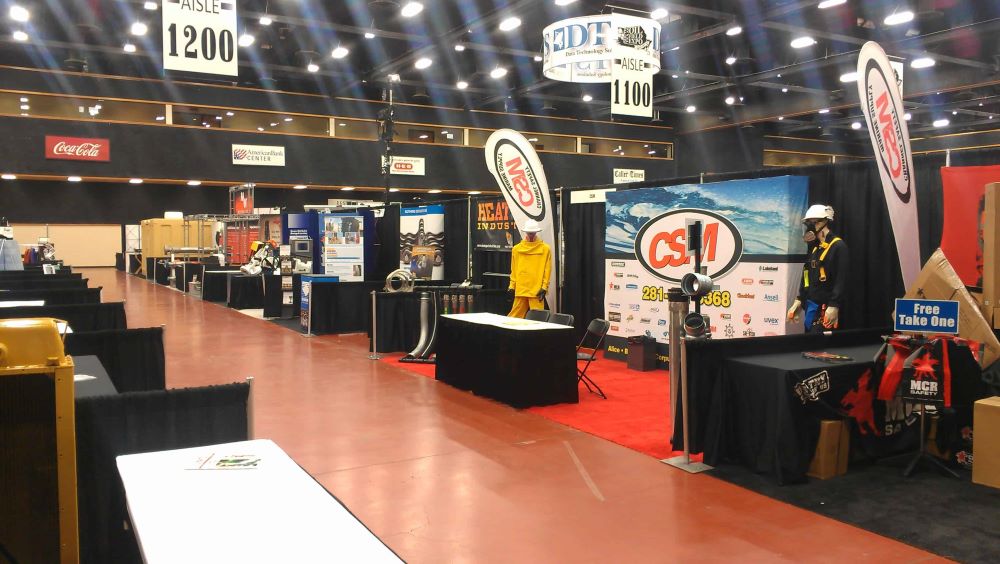
How Custom Trade Show Exhibit Design Goes From Idea to Show Floor
A successful custom trade show booth design starts with strategy, not decoration. Before choosing graphics, structures, furniture, or technology, exhibitors should determine what they need the space to accomplish.
That strategy then guides every stage of the design process.
What Should You Decide Before Designing a Trade Show Booth?
Before designing the booth, establish your goals, audience, space requirements, budget, and the actions you want attendees to take. These decisions give the design team a clear framework for developing the exhibit.
A good discovery process should answer questions such as:
- What is the primary goal of exhibiting?
- Who is the target attendee?
- What products or services need to be featured?
- How many team members will typically be in the booth?
- Will the space need meeting or demonstration areas?
- How much storage is necessary?
- Will the exhibit include monitors, lighting, interactive technology, or other equipment?
- What should attendees understand about the brand within the first few seconds?
- What action should visitors take before leaving?
For example, a company focused on product demonstrations needs a different layout than one primarily holding private sales meetings. A brand launching a new product may prioritize visibility and demonstration space, while another exhibitor may need comfortable areas for longer conversations.
Defining the purpose first prevents the booth from becoming a collection of attractive elements without a clear function.
How Does a Custom Booth Concept Become a Working Design?
The concept stage translates the exhibitor’s goals into a physical environment, including the layout, traffic flow, structures, branding, graphics, furnishings, and interactive elements.
Designers must balance visual impact with practical considerations. A booth may look impressive in a rendering, but it also needs to function when attendees and staff fill the space.
Key considerations include:
- Visibility: Important branding and messaging should be easy to recognize from relevant approaches to the booth.
- Traffic flow: Attendees should be able to enter, explore, interact, and exit without unnecessary congestion.
- Function: Demonstrations, meetings, storage, reception areas, and technology need appropriate space.
- Brand consistency: Colors, graphics, materials, and messaging should create a recognizable brand experience.
- Show requirements: Height restrictions, fire and safety rules, utilities, accessibility considerations, and venue regulations can influence the final design.
- Installation: The exhibit must be designed with transportation, assembly, dismantling, and labor requirements in mind.
According to the Center for Exhibition Industry Research (CEIR), face-to-face exhibitions continue to provide businesses with opportunities to connect buyers and sellers in environments specifically designed for discovery and interaction. That makes the physical booth more than a backdrop. It becomes part of how an exhibitor communicates, engages visitors, and supports conversations.
What Happens After the Trade Show Booth Design Is Approved?
Once the booth design is approved, the project moves from creative development into detailed production and logistical preparation. This is where the visual concept must become a buildable, transportable, and installable exhibit.
Depending on the project, this stage may include:
- Finalizing structural specifications
- Producing booth graphics
- Preparing signage and branded elements
- Confirming furnishings
- Coordinating audiovisual or interactive components
- Planning lighting and electrical requirements
- Confirming storage needs
- Reviewing shipping and freight requirements
- Planning installation and dismantling
- Coordinating show-site labor
Details matter at this stage. A screen that requires power, a hanging sign that requires rigging, or a product display with special handling requirements can affect other parts of the plan.
This is also one reason exhibitors benefit from considering logistics during design rather than after the booth has already been developed. Design, production, freight, labor, and installation are interconnected parts of the same project.
How Do You Prepare a Custom Exhibit for the Actual Show?
Before the show, the exhibit team should confirm that the booth design, graphics, equipment, shipping, labor, utilities, and installation plans are aligned with show and venue requirements.
A pre-show review should verify:
- Final booth dimensions and location
- Installation and dismantling schedule
- Shipping destination and deadlines
- Material handling requirements
- Electrical and internet orders
- Rigging requirements, if applicable
- Final graphics and signage
- Furniture and equipment
- On-site labor arrangements
- Exhibitor move-in instructions
Exhibitors should also prepare their own team for the space. Staff should know where demonstrations occur, which areas are intended for conversations, where supplies are stored, and how attendees should move through the booth.
Superior Expo Services can help connect these pieces. By supporting custom exhibits, exhibitor services, logistics, labor, transportation, and event operations, our team understands how decisions made during booth design affect what happens on the show floor.
What Makes a Custom Trade Show Booth Effective?
An effective custom exhibit combines strong branding with a clear purpose and an easy-to-use layout. The best design is not necessarily the booth with the most components. It is the booth where each component supports the exhibitor’s goals.
Before approving a design, ask:
- Can attendees quickly tell who we are?
- Is our primary message easy to understand?
- Does the booth provide a reason to stop?
- Can visitors move comfortably through the space?
- Can our staff work effectively inside it?
- Does the layout support our planned conversations or demonstrations?
- Are storage and operational needs accounted for?
- Can the exhibit be transported, installed, and dismantled efficiently?
- Can parts of the exhibit be reused or adapted for future shows?
Thinking beyond a single event can also increase the usefulness of an exhibit. Modular or adaptable components may allow companies to reconfigure their displays for different booth sizes, messaging needs, and future events.
Frequently Asked Questions About Custom Trade Show Booth Design
How long does it take to design a custom trade show booth?
Custom trade show booth design can take several weeks to several months, depending on the size, complexity, production requirements, revisions, and show schedule. Exhibitors should begin as early as possible, particularly for large custom exhibits or projects involving specialized graphics, technology, or fabrication.
What information does a booth designer need?
A booth designer typically needs the booth dimensions, brand guidelines, goals, budget, target audience, required features, products or services being displayed, and applicable show requirements. Providing clear information early helps the designer create a concept that is both attractive and practical.
What is the difference between a custom and standard trade show booth?
A standard exhibit generally uses predetermined structures or configurations, while a custom trade show booth is designed around the exhibitor’s specific brand, objectives, space, and functional requirements. Customization can range from graphics and layouts to completely tailored exhibit environments.
Should logistics be considered during booth design?
Yes. Freight, material handling, labor, installation, dismantling, utilities, and storage should be considered while the booth is being designed. Addressing these requirements early can help identify logistical challenges before the exhibit reaches the show floor.
Bring Your Custom Expo Booth From Concept to Reality
A custom trade show booth starts with an idea, but bringing that idea to life requires careful coordination between strategy, design, production, and show-site execution. When each stage is planned with the next one in mind, exhibitors can create an environment that represents their brand while functioning effectively on the trade show floor.
Superior Expo Services provides custom exhibit solutions backed by extensive trade show and event experience. From developing the concept to coordinating the details required to get it onto the show floor, our team is ready to help bring your vision to life.
Ready to start designing your custom exhibit? Contact Superior Expo Services to discuss your next trade show.